
"Avignon Papacy" Primer
The story came a few days ago from the Free Press:
Vatican officials briefed on the meeting, who spoke with The Free Press on the condition of anonymity, described it as a bitter lecture warning that the United States has the military power to do whatever it wants—and that the Church had better take its side.
The idea is that, back in January, Under Secretary of War for Policy Elbridge Colby summoned and lectured Cardinal Christophe Pierre, then-ambassador to the US from the Pope. Colby told him that the U.S. is very powerful and the Pope ought to fall in line on his inflammatory remarks. Along the way he mentioned something called the Avignon Papacy.
Interestingly, a lot of people on the internet have suggested that the U.S. "invoked" the Avignon Papacy, which makes it sound like some kind of diplomatic legal precedent from the Middle Ages. While Colby did "invoke" it in the sense that he yanked it out of history to make a point, he wasn't referring to any kind of agreement where America stood for medieval France or anything like that.
Outlets like Newsweek have run their versions of "Avignon Papacy Explained: What Reported US Threat to Pope and Vatican Means." In them you'll get good, swift, explanations of what exactly happened, that will still leave you confused because there are entities involved that don't line up with their equivalents now properly.
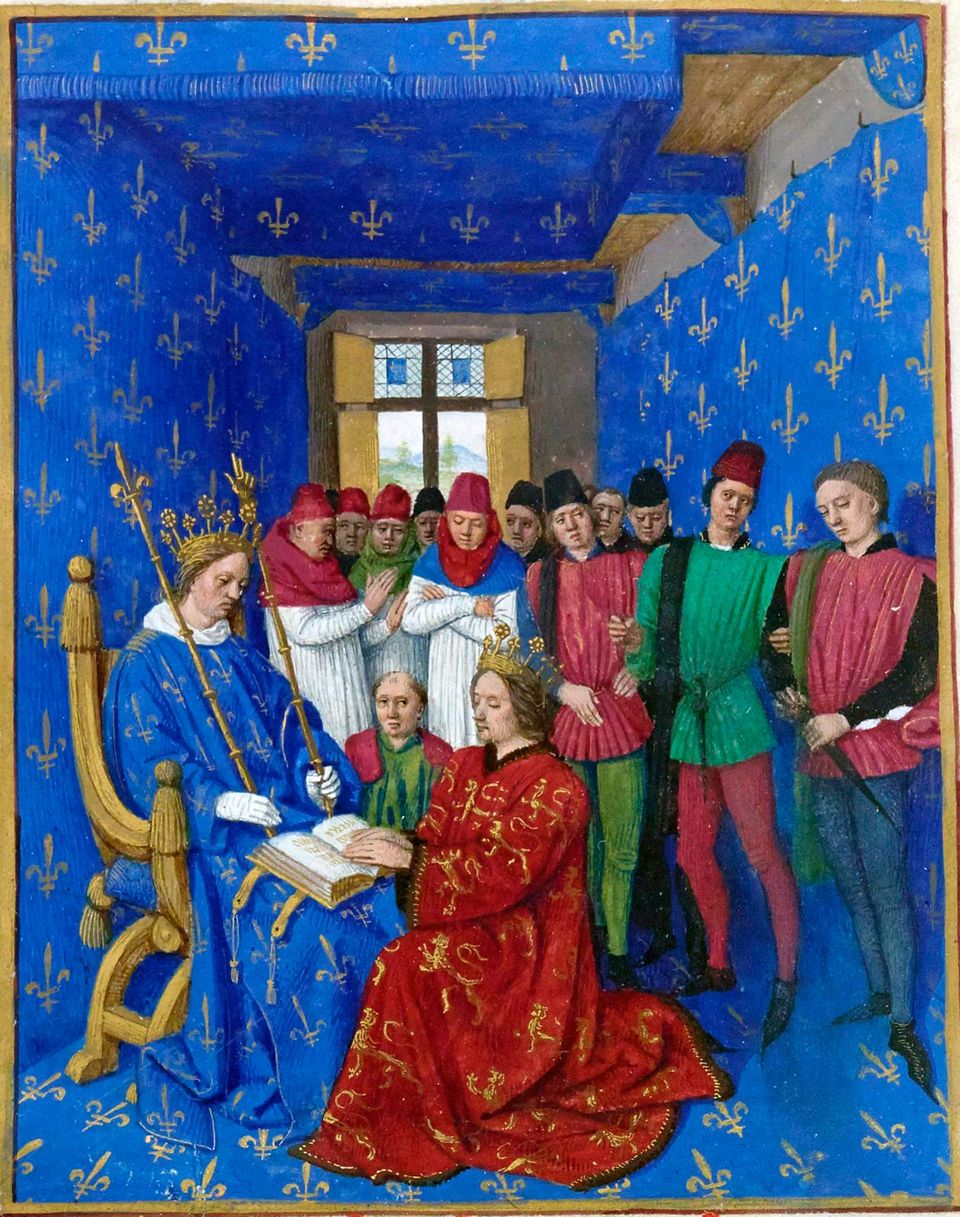
Here's the scene. It's November 1302. The place is "Christendom," which isn't Europe but a stretch of territory at the top of the Mediterranean. It's been gaining power, but there's a problem: who gets credit, who consolidates? The church or the crown? By "crown," understand whatever emperor or king has the most heft at that moment, and by "church" read Pope in Rome. Both sides have financed a ton of crusades, making inroads mostly at Christendom's eastern Edge.
Right now, one crown is King Philip IV of France, a big power right at the top-left of the Mediterranean. The pope is Boniface VIII, in Italy, not far away East. Philip was a very powerful and inflexible dickhead nicknamed "Iron King." One of his bishop nemeses wrote, "He is neither man nor beast. He is a statue." Sort of an inverse Trump, what Trump's underlings wish he was, I guess?
Boniface VIII is also very powerful and inflexible and meddles in local politics whenever he can. He has got involved with Scottish independence of all things and appears in a funny section of Dante's Inferno where, despite being still alive at the time, Boniface VIII puts in a kind of advance appearance in the eighth circle of hell for selling redemption for cash.
So, it's November 1302. Boniface is fuming because Philip wants him to pay for a new crusade that his name wouldn't even be on. He issues a papal bull explaining that "the Roman pontiff," meaning himself, was the ruler of all regular political (historians say "temporal") rulers.
Soon, Philip will clap back saying he's subject to nobody. Boniface will excommunicate Philip and all of France. Before he can finish drafting his order, however, some Italian friends of Philip's will break into his house and beat him to death.
A nice new friendly Pope will replace Boniface, and bring Philip and France back in-house. Then, amazingly enough, a series of French popes moved the whole Holy see administrative offices from Rome to Poitiers, then Avignon. It'll go back in seventy or so years, when Catherine of Siena gets Italian business back together, but it's an interesting time that some people will call the "Babylonian Captivity."
So basically it's a threat to beat the pope to death



Comments ()